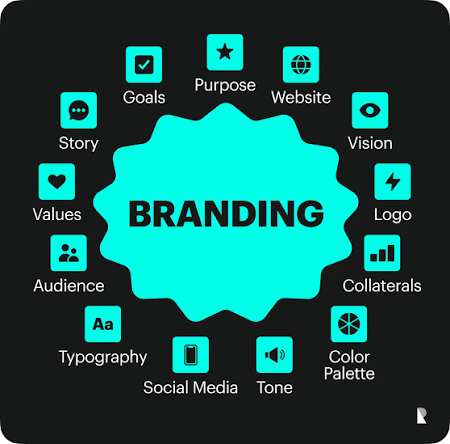
Branding is more than creating a logo or choosing colours for your business. It is the process of shaping how people see, understand, remember and experience your business.
Every business has a brand, whether it has intentionally built one or not. The difference is that some businesses actively shape their brand while others simply allow customers to form an opinion based on whatever they encounter.
Your logo, website, social media presence, packaging and advertising all contribute to your brand, but branding goes beyond visual design. It involves your positioning, messaging, personality, customer experience, reputation and the overall impression people have of your business.
In a competitive market, good branding can help a business become easier to recognize, easier to understand and more memorable.
What Is Branding?
Branding is the strategic process of creating and managing the identity and perception of a business, product or organization.
It involves defining what a business stands for, who it serves, what makes it different and how it should be perceived in the market. Those decisions are then expressed through visual identity, communication, customer experience and other touchpoints.
This is why branding should not begin with the question, "What should my logo look like?"
A better question is, "What should this business be known for?"
The answer to that question can influence everything from your brand identity and website to your marketing strategy and customer experience.
Branding vs Brand Identity
Branding and brand identity are often used interchangeably, but they are not exactly the same thing.
Your brand is the perception people have of your business. Your brand identity is the collection of visual and verbal elements you create to communicate that brand.
A brand identity can include your:
- Logo
- Colour palette
- Typography
- Photography style
- Graphic elements
- Packaging
- Website design
- Brand voice
- Messaging
- Social media design
Branding is the broader strategic process behind all of these elements.
A well-designed logo without a clear strategy may look good, but it may not communicate anything meaningful about the business.
Why Is Branding Important?
People have more choices than ever before. In many industries, customers can find several businesses offering similar products or services within minutes.
This creates a challenge.
If your business looks, sounds and communicates like everyone else, there may be very little reason for people to remember it.
Strong branding helps create distinction.
It gives your business a recognizable identity and helps customers understand what makes you different. It can also create consistency across different platforms, making your business feel more established and intentional.
For a growing business, that consistency matters.
Someone may first discover you through Instagram, visit your website later, see your advertisement a week after that and eventually become a customer. If all those experiences feel disconnected, you make it harder for people to build a clear understanding of your business.
A strong brand brings those experiences together.
The Key Elements of Branding
There is no single formula that works for every business, but effective branding usually involves several important components.
1. Brand Strategy
Brand strategy is the foundation.
It defines the direction of the brand and answers important questions about your business, audience, positioning and competitive advantage.
A brand strategy may consider your target audience, brand purpose, positioning, values, personality, messaging and differentiation.
Without this foundation, visual design can easily become decoration without direction.
2. Brand Positioning
Brand positioning is about the place you want your business to occupy in the minds of your target audience.
What do you want to be known for?
Who are you trying to attract?
What makes your offer different?
Why should someone choose you instead of another option?
Clear positioning makes it easier to communicate your value and build a brand that has a specific place in the market.
3. Visual Identity
Visual identity is how your brand looks.
It includes your logo, colours, typography, imagery, layouts, graphic elements and other visual assets.
A strong visual identity should not simply be attractive. It should be appropriate for the business, recognizable and connected to the brand's positioning.
This is where brand design becomes important.
Good brand design translates strategy into a visual system that people can recognize and associate with your business.
4. Brand Messaging
Your brand also needs to know what to say.
Your messaging includes the words, ideas and promises you use to communicate with your audience.
Your website headline, social media captions, advertisements, product descriptions and sales messages should feel like they come from the same business.
A strong visual identity with unclear messaging can still leave customers confused.
5. Customer Experience
Branding does not stop when someone sees your logo.
It continues when they visit your website, send a message, purchase your product, interact with your team and use your service.
Every interaction contributes to the perception of your brand.
If your marketing promises a premium experience but your actual service feels careless, there is a disconnect between your branding and your business.
The strongest brands make the promise and the experience support each other.
What Makes a Strong Brand?
A strong brand is not necessarily the one with the most complicated logo or the most expensive-looking design.
It is a brand that is clear about who it is, who it serves and what it wants to be known for.
Strong brands tend to have a few things in common: clarity, consistency, distinction and relevance.
They are clear enough for people to understand. Consistent enough to become recognizable. Distinct enough to avoid blending into the competition. And relevant enough to connect with the people they want to reach.
This is why copying another successful brand rarely creates the same result.
You can copy the colours, typography and visual style, but you cannot copy the years of positioning, reputation and customer experience behind that brand.
Your business needs its own reason to be remembered.
Is Branding Only for Big Companies? Absolutely not.
Branding is important for small businesses, startups, personal brands and established companies alike.
In fact, building a clear brand early can help a growing business avoid many problems later.
Instead of constantly changing your logo, messaging, colours and communication style as the business grows, you can establish a stronger foundation from the beginning.
That does not mean your brand can never evolve.
Good brands can change as their businesses grow. The difference is that those changes are intentional rather than random.
Branding and Business Growth
Branding does not replace a good product, strong marketing or excellent customer service. But it can make all of those things easier to communicate.
A business with a clear brand can create more consistent marketing materials, communicate its value more effectively and build stronger recognition over time.
It can also make it easier for customers to understand what the business offers and why it exists.
This is particularly important when entering a competitive market.
You are not only competing on what you sell. You are also competing on how people perceive your business.
The Biggest Branding Mistake Businesses Make
One of the biggest mistakes I see is treating branding as a design project instead of a business decision.
A business owner may say, "I need a new logo," when what they actually need is a clearer position in the market.
Another may say, "My Instagram doesn't look professional," when the bigger problem is that their messaging is unclear.
Sometimes the logo is not the problem.
Sometimes the business simply has not decided what it wants to communicate.
That is why effective branding starts with understanding the business before designing for it.
Building a Brand That People Remember
Your goal should not simply be to create a brand that looks good.
Your goal should be to create a brand that makes sense.
People should be able to understand what you do, recognize you when they encounter you and remember something meaningful about your business after the interaction.
That requires more than a logo.
It requires strategy, positioning, identity, messaging and consistency.
When these elements work together, your brand becomes more than a collection of designs. It becomes a system that helps your business communicate clearly and occupy a distinct place in the market.
Branding is not just about how your business looks. It is about what your business means to the people who encounter it.
And that is what makes branding worth investing in.